The events of the 1990’s at Black River House by no means mark the beginning of its long and disturbing legacy. Several years of research conducted in and around Kildubhan as well as at the house itself have unearthed a series of tragic and unfortunate events which affected almost every generation of the Kinkedd family as well as those around them. Whilst thinking along these lines it is quite possible to regard the Black River House Murders of 1992 and the disappearance of The Secret Method four years later as merely the most recent examples of a disturbing and continuing cycle of loss and personal misfortune. To take this concept further there appear to be a wealth of examples in the history of the house and its inhabitants which point to a repeating pattern of history in both general events and more specific examples. Whilst the personal tragedies of the Kinkedd family are explored on the Tragic History page there are several characteristics which seem to have been repeated or echoed throughout history, regardless of who the occupants of Black River may be. The key areas of note are examined below.
Recurrent Tragedies - Murder and Disappearance Such events have long been associated with Black River House and the village of Kildubhan. The most notable examples today are The Black River House Murders and The Lost Band case. However instances of both murder and disappearance have occurred throughout the history of Black River House and to find the first tragedy we must go back to the days of its construction.
Mental Illness A tendency toward depression, perhaps even madness in some cases, has long been associated with creative individuals. A delicate balance of the mind it seems, is often the heavy price paid for creative and artistic ability. This is certainly true of many occupants of Black River House and it is known that several generations of the Kinkedd family were prone to, at best depression and at worst insanity. In one sense this medical history serves to rationalise the repetition of events at Black River House, discounting the involvement of unexplained influences. However, this theory suffers from the fact that the recurrent cases of mental illness were not restricted entirely to the Kinkedd family.
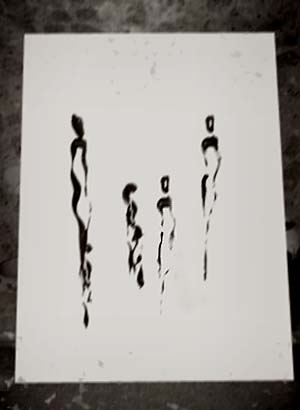
"My Poor Sweet Love" Throughout the history of Black River House, most commonly at times of distress, illness or death, one phrase in particular appears time and time again. In such cases it is difficult to choose between the temptation to believe in an external influence driving history to turn inward and repeat itself, or the more rational notion of a self - fulfilling prophecy. The phrase "My Poor Sweet Love" punctuates the history of Black River House from the time of George Edward Kinkedd through to the disappearance of The Secret Method. Though many believe that George Edward murdered both his wife and one of his children, he sank into a deeper depression than ever in the months following her death and would not refer to her by name. When speaking of his wife, George would only use the term "My Poor Sweet Love". The sentiment was picked up a generation later when Tom Kinkedd returned from action. During his delirium and obsessive painting he created a picture of his "sister" to whom he referred as Emma. As is noted elsewhere, Tom had no sister though his mother Emily did lose a child through prematurely in 1900. The painting in question was entitled "My Poor Sweet Love"
The repetition of the phrase appears to have outlasted the Kinkedd family as its next appearance comes during the residence of John Marchant. Having brutally murdered his family in November 1992, Marchant scrawled a cryptic message above the heads of each body. Above the form of his dead wife Carole were written the words, "My Poor Sweet Love". Finally in 1996 when police investigated the disappearance of The Secret Method, they found numerous instances of graffiti on the inner walls. Many of these were later discovered to correspond to entries in the diary of John Marchant, which was not released by police until 2002. More chilling still, one example of the graffiti read unmistakably "My Poor Sweet Love".
Artists and Artwork Black River House has played host to an unusual number of artists from various disciplines, be they poets, painters or musicians. Whilst it is possible to trace an artistic thread within the Kinkedd family from the time of George Edward, the pastime has almost always been associated with personal troubles of some kind. Very often the artwork served as a visual expression of a difficult mental state.
Cursed Artwork Finally, to remain with the theme of creativity, many of the artworks produced throughout the history of Black River House seem to be as blighted as the lives of those who created them. In 1766 the life works of the poet, Sir Henry Rupert Barnsley Applegate were lost to a house fire. Many of the verses had been written during stays at Black River House and focused upon the lives of the Kinkedd family. This would be the first case of the supposed ‘curse’ attached to art produced within the house. The religious themed works of George Edward Kinkedd and, years later, his grandson John, have often changed hands and several recipients of such works have found themselves in unfortunate, sometimes fatal situations. In 1944 an American infantry man named Tom Carvel was stationed in England. He purchased a small crucifix in an antique shop which was believed to have been carved by George Edward Kinkedd. Intended as a gift for his wife Mary, it was found wrapped tightly around her neck when her body was found floating face down in a mill pond. More recently Wiltshire farmer Ron Mitchell lost his farmhouse and three horses to a fire in 1970. The blaze started in his stables where he had stored a John Kinkedd oil painting bought the previous day. Disturbingly, Mitchell noted that the picture itself had depicted an inferno but had been the sole surviving possession in the fire. The wooden frame was found to be singed and charred in places though the image itself was intact. Artistic works by those outside the Kinkedd lineage do not seem to be immune to these strange phenomena either. John Marchant conducted a significant amount of research into Black River House and the village of Kildubhan and was believed to be working on a historical text based upon his findings. Carole Marchant also left behind a portfolio of illustrations, many of which were based on the house. These personal effects were entrusted to John Marchant’s friend Geoff Gibson in 1993 and he in turn passed on a few sketches to others who had known the Marchant family.
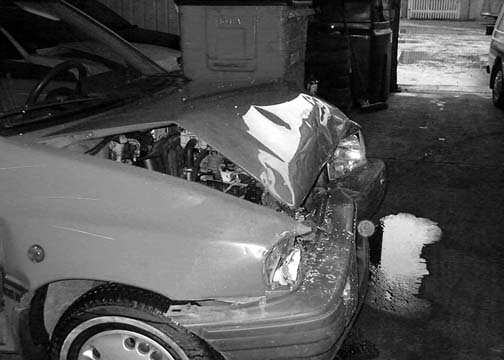
Finally, the recovered master tapes of the Secret Method have developed a reputation for ill - luck during their process of restoration for this site. Sound engineer Mitch Bell suffered a serious car collision while transporting some of the work in February 2005, though thankfully he was not hurt. He also opted to continue working on the project despite his accident for which I am eternally grateful. The "cycle of events" is a fascinating concept and when the evidence is set out as above, a compelling case can be made for a series of events which appear to repeat indiscriminately throughout history, paying little attention to the inhabitants of the house at any one time. This notion is a fascinating idea which effectively renders the residents of Black River House, regardless of their name or background as pawns, whilst the recurrent pattern of events plays it self out time and time again. However this theory should perhaps be tempered with caution. The events set out above are listed for convenience on a single page, but their content spans two centuries of history. The notions of auto-suggestion and the self fulfillment of prophecy must also be taken into account. The phrase "My Poor Sweet Love" for example appears in generation after generation of the Kinkedd family, but this does not rule out the possibility that it was being consciously revisited. Furthermore whilst the use of the phrase by John Marchant in 1992 is disturbing, its appearance on the walls of the House in was not actively concealed and The Secret Method who repeated the sentiment four years later may have been aware of it.
|